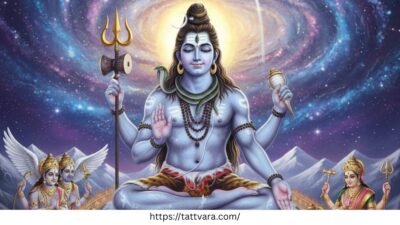
The transformative nature of Lord Shiva as the ultimate divine force manifests in many different forms, with one group of representations being the 11 forms of Lord Shiva known as the “Rudras.” These forms of Lord Shiva are characterized by their high energy levels and connection to cosmic energies. The energy associated with each of the Rudras conveys to devotees that Lord Shiva possesses both a protective and aggressive energy and consciousness.
Through the study of the 11 rudra avatars of Lord Shiva, the devotee may begin to understand some of the many different aspects of the creation, destruction, and spiritual awakening of humanity.
Who Is Rudra? The Fierce Aspect of Shiva
Shiva has been linked with the name Rudra for at least as early as the Vedic tradition. The term “Rudra” means an “unstoppable force” and “to roar.” Generally, when worshipping Shiva, he is depicted as either calm or meditative; however, when referring to him by the name RUDRA, it can be stated that he possesses dynamic power and transformative energy.
More than one form of RUDRA indicates multiple ways divine powers operate in the universe; that is why it is essential to know about SHIVA’S eleven RUDRA NAMES if someone desires a more profound spiritual understanding.
The Origin of the 11 Rudras
Traditionally, in Hindu belief, the Rudras were created as helpers in restoring the world to its original form. Every one of the eleven divine forms of Rudra possesses a different trait of Shiva, such as power, intelligence, flame, guard, or elevation. Altogether, they are referred to as the Ekadasha Rudras, which means the eleven divine forms of Rudra.
These manifestations are often invoked during rituals for protection, purification, and spiritual growth.
Also Read: 19 Avatars of Lord Shiva Explained: Names & Stories
Shiv 11 Rudra Name: The Sacred List of Ekadasha Rudras
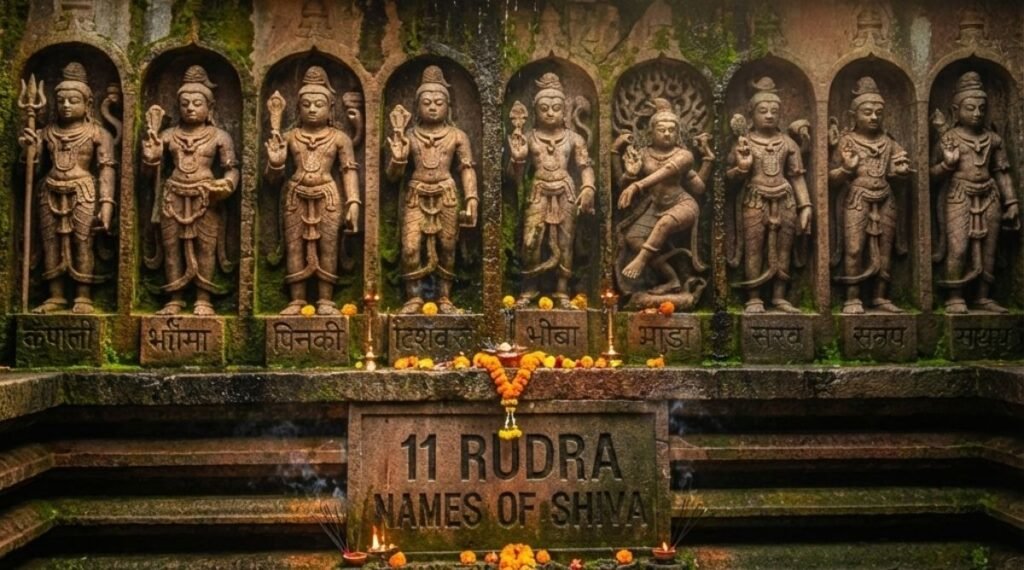
The Shiv 11 Rudra names most commonly described in spiritual texts are as follows. Each name reflects a unique cosmic function:
- Kapali—The Destroyer of Ego
Kapali is the embodiment of losing one’s ego and not being afraid to free oneself from one’s material persona or identity to achieve enlightenment.
- Pingal—The Source of Vital Energy
Pingal is representative of vibrant energy and vitality. The second Rudra embodies both excitement and strength, as well as quick motion, as they create.
- Bheem—The Mighty Protector
Bheer Rudra means great power and divine protection. To eliminate fear and negativity, we invoke Bheer Rudra.
- Virupaksha—The All-Seeing Lord
Virupaksha has higher levels of awareness, and it is through this higher level of awareness that he sees beyond the illusion.
- Vilohita—The Fire of Transformation
Vilohita-Rudra is associated with purification and spiritual transformation. He is a fire that burns away ignorance and helps souls to reach enlightenment.
- Shasta—The Divine Teacher
Shasta is the divine teacher who represents discipline, knowledge, and balance. He teaches followers to be righteous and wise.
- Ajaapada—The Eternal and Unborn
Ajaapada Rudra reflects the timeless and unborn nature of consciousness. This form is linked to yogic transcendence.
- Ahirbudhnya—The Hidden Cosmic Power
Ahirbudhnya symbolizes deep cosmic energy, often associated with serpent power and the unseen forces of the universe.
- Shambhu—The Auspicious One
Rudra is Shambhu. He brings us peace, compassion, and graceful divinity with his positive energy.
- Chand—The Fierce Guardian
Chand-Rudra symbolizes the use of controlled anger to destroy bad thoughts or actions and maintain the cosmos’ balance.
- Bhava—The Essence of Existence
Bhava-Rudra represents creation and change. It is the beginning of life and continues through the cycles of life and death throughout time.
Also Read: 7 Divine Krishna Mantras for Inner Peace and Abundant Blessings
Why Some Traditions Mention a 12 Rudra Name
Although the 11 Rudras’ names have been largely agreed upon, there are several varying accounts of the 12th Rudra’s name from different philosophical perspectives and regional understandings. The 12 Rudra names have been used in different contexts to represent separate divine entities, but in some situations, these additional divine figures represent other aspects of Rudra’s energies and powers, thus making it a different representation of Rudra.
These differences of interpretation from tradition and custom are examples of the many different areas in which the Hindu vision differs. The energy of the Hindu vision is limitless, as evidenced by the many variations of how it is interpreted and used.
Spiritual Meaning of the 11 Rudra Avatar of Lord Shiva
11 Rudra avatar of lord shiva, referred to as “Rudras,” represents not only the fierce power of the Lord but also the forces of courage, awareness, discipline, transformation, and peace that are inherent in each human being. By worshiping the Rudras, one can awaken one’s own inner strength and remove obstacles that may impede one’s spiritual journey.
Devotees can use chants of the names of the Rudras, participate in rituals, and meditate on the forms of the Rudras as a means of aligning with Shiva’s transformational energy.
Conclusion: The Timeless Power of the 11 Rudras
Lord Shiva’s unlimited capacities are represented through the eleven Rudras, showing how He made His divine nature apparent in both the seen and unseen worlds.
Through the meanings and names of the eleven Rudras, devotees can attain a greater appreciation for how Shiva provides both spiritual support and cosmic energies as a means of attaining balance, harmony, and enlightenment.
By exploring and learning about the meanings and the eleven Rudra names associated with Lord Shiva, one may appreciate Him not just as the destroyer, but also as the benevolent and Divine Protector and an everlasting Guide in the search for Truth.