Introduction
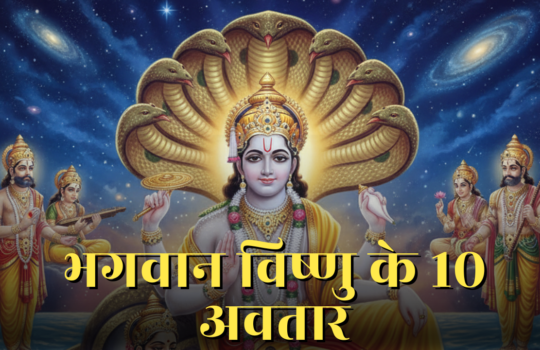
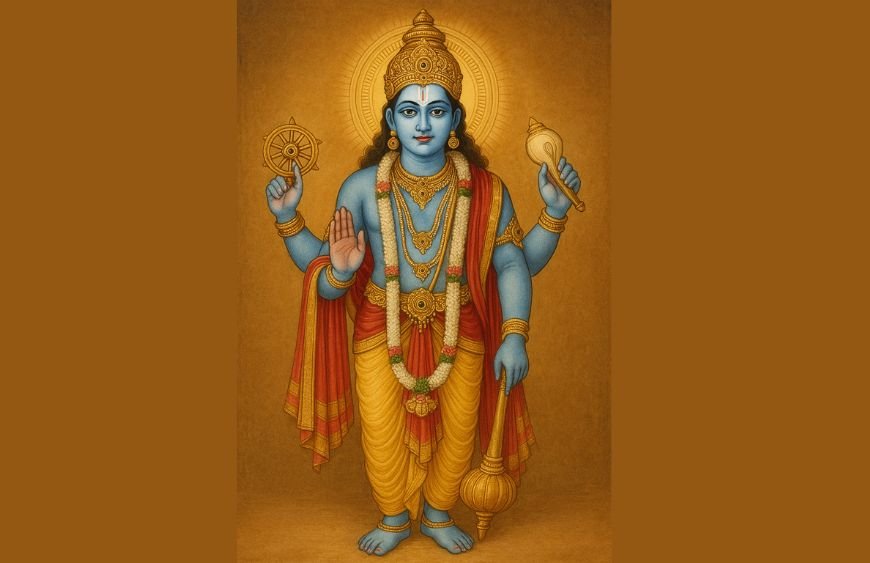
Numerous stories are told about the Hindu gods and goddesses and their contribution to the maintenance of the Dharma, or righteousness of life, to everybody; Vishnu can be considered one of the three principal deities of Hinduism—the Preserver of the Universe. He manifests himself when evil is threatening to destabilize the Earth, and he appears in ten incarnations, or the 10 avatars of Vishnu. They both serve their own purpose that is also similar to that of Goddess Lakshmi, his divine wife, because she assists him in performing this role.
Understanding the 10 Avatars of Vishnu
The combination of the ten different forms (avatars) of Vishnu is called the Dashavatara. The Dashavatara is the way life was developed on the planet Earth, and the eternal duel between good and evil. The ten avatars of vishnu all appear in various forms; some of them are animal, others are human, and this demonstrates the fact that God has a natural means of interfering in the world. The ten avatars of Vishnu and the role played by Lakshmi in relation to the ten avatars are discussed below.
- Matsya (The Fish)
Vishnu, in the form of the fish (Matsya), comes to the rescue of all human beings in the form of a protector of the Vedas and Manu (the first man) as he takes both of them to safety during the great flood. In the form of Matsya, Vishnu continues to instruct all human beings by teaching them how to live and survive. Moreover, Lakshmi, being Matsya’s wife, is the embodiment of knowledge and security, which can help to preserve the most sacred teachings of any culture. - Kurma (The Tortoise)
The second of all avatars of Vishnu, Kurma, supported the churning of the ocean to obtain Amrita, the nectar of immortality. Lakshmi played a crucial role as the goddess of fortune, helping guide the gods and demons through the churning process, ensuring that prosperity and balance would be restored. - Varaha (The Boar)
The devil Hiranyaksha sank the planet in the sea. Varaha then saves the Earth and incarnates it into Bhudevi to carry it to his house safely. This avatar, therefore, depicts Lakshmi, Bhudevi, and the entire Nature collaborating to create the universe and construct its future through cooperation, unlike the activities of the demon to ruin the creation. The meaning of this tale is that creation and the capability of the planetary and natural world to exist are founded on reciprocity rather than a unilateral act. - Narasimha (The Man-Lion)
Narasimha, the Man-Lion, came to save his devotee, Prahalada, and slay the evil monster Hiranyakashipu, who had already been promised by the great sage that he would never fall into the hands of either man or animal. It is because Lakshmi was there and Narasimha was there in this manifestation that it is possible, using Narasimha, to experience courage, blessings of the gods, and the guardianship of the virtuous; and that through the process of overcoming evil, dharma will overcome adharma. - Vamana (The Dwarf)
Vamana, the Brahmin dwarf, got the demon king Bali to surrender to him by humbly asking him to grant him three steps of land. The three steps of land that he made were all around the universe! Accompanied by his wife, the one who was called Vamana, she too assisted in keeping the right and wrong (the moral/spiritual law) and hence made sure that even the mightiest kings would take proper care in respecting the laws of the universe. - Parashurama (The Warrior Sage)
The axe-wielding warrior was to be deposed by Parashurama, a warrior who was created to kill those kings who were corrupt and oppressive and to bring back justice, prosperity, and virtue and to establish the moral order in the human kingdoms by his avatar, Lakshmi, as a way of sustaining, reinforcing, restoring, and enhancing the order of the universe using the power of a god. - Rama (The Prince of Ayodhya)
Rama, the hero of the Ramayana, is known for his unwavering commitment to truth and dharma. Lakshmi incarnates as Sita, his devoted consort, embodying purity, patience, and support. The story of Rama and Sita highlights the partnership between righteousness and prosperity, as Lord Vishnu 10 avatars names include Rama as a symbol of ideal kingship and moral integrity. - Krishna (The Divine Cowherd)
Krishna, widely considered to be the most well-known of Vishnu’s incarnations, played many roles (ranging from a playful child to a sage), most popularly seen in the Mahabharata (an ancient epic of India). Lakshmi (in this case, Rukmini and other wives) represents devotion, prosperity, and love. Together, they help people be free from greed, selfishness, and delusion. Krishna’s life provides a guide on how to live righteously. - Buddha (The Enlightened One)
Hinduism classifies Buddha as one of its nine incarnations, or avatars, of historical and spiritual importance, teaching the virtues of compassion and non-violence to mankind, whilst degenerating into a state of moral decay. Lakshmi embodies Buddha in her avatar as a source of spiritual guidance, wisdom, and enlightenment (inner wealth) to allow humanity to recognize that physical wealth, along with moral and spiritual responsibility, contributes to true prosperity. - Kalki (The Future Warrior)
The tenth avatar, Kalki, has not yet appeared, but it is prophesied that he will come on a white horse to vanquish evil and restore dharma at the end of Kali Yuga. The role of Lakshmi in that future avatar represents ultimate victory, abundance, and the return to cosmic order through the establishment of righteousness.
The Significance of Vishnu’s Avatars
The vishnu all avtar can be viewed as a guide for humankind in terms of how God intercedes in our lives in accordance with the time period where the individual finds himself or herself within. The many challenges represented by each incarnation, from being the fish (Matsya) to the prophesied incarnation (Kalki), have been addressed by way of saving knowledge from the floodwaters, saving the world from destruction, stopping the evil demonic force, and guiding us through spiritual development.
Additionally, Laksmi has been present during the many incarnations of Lord Vishnu and is a representation of wealth, virtue, and help or aid to those who strive for success in their respective activities. Laksmi is not simply a spectator to the actions of Lord Vishnu; she is a major force in the life of the individual who is devoted to doing ‘dharma’ and obtaining abundance.
Conclusion
The 10 avatars of vishnu in order are actually more than just legends; they are indications of moral behavior, indications of divine assistance, and indications of the universe’s equilibrium. The ranks of Vishnu as various avatars (Matsya to Kalki) illustrate the manner in which the divine adapts itself to bring back the balance in the chaotic times of human existence. Moreover, Lakshmi plays an indispensable role in all her avatars in the three notions of wealth, dharma, and bhakti. The significance of these three concepts in the further existence of life and/or righteousness could not be overstated.
Knowing the names of the 10 avatars of Lord Vishnu in order and their tales, we can gain insight into the richness of the Hindu mythology, the knowledge that is contained in it, and the essence of the interconnection between the divine power and human beings. By seeing the lives and missions of all avatars of Vishnu, we understand that every difficulty, be it physical, moral, or spiritual, can be solved using courage, wisdom, and the guidance of the deities, where Lakshmi plays the role of making sure that righteousness is always rewarded.